
Explainer · August 5, 2026 · 5 min · By Marisol Etcheverry
IPL vs. Pigment Lasers for Age Spots: What the Physics Actually Predicts
Both technologies target melanin, but they do it in different ways. Here is a plain-English comparison of how intense pulsed light and Q-switched or picosecond lasers handle solar lentigines, and why the right choice depends on your skin, not the marketing.
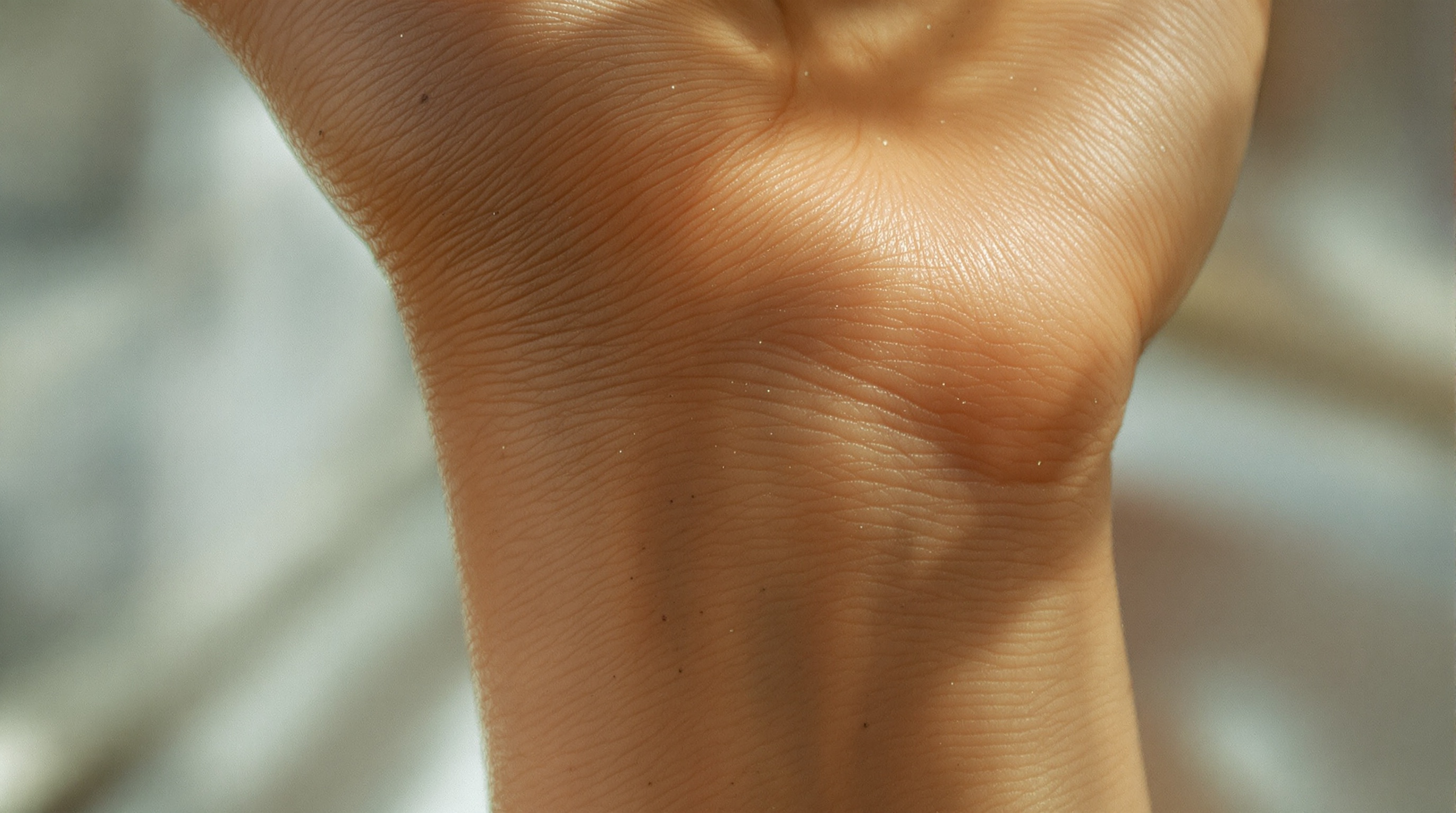
Walk into any medical spa consultation for age spots and you will likely hear two options: intense pulsed light, usually called IPL or a photofacial, and a pigment-specific laser, typically a Q-switched or picosecond device. Both can lighten solar lentigines, the flat brown spots that accumulate on sun-exposed skin over decades. But they are not interchangeable, and understanding the mechanism behind each one explains most of the real-world differences in results, downtime, and risk.
Start with the target. An age spot is a cluster of keratinocytes loaded with excess melanin, produced by melanocytes that have been chronically stimulated by ultraviolet exposure. Any light-based treatment works through a principle called selective photothermolysis: deliver energy at a wavelength that melanin absorbs strongly, in a pulse short enough that heat stays confined to the pigmented target instead of spreading into surrounding tissue. Melanin absorbs across a broad range, roughly 400 to 1100 nanometers, with stronger absorption at shorter wavelengths. That broad absorption curve is why so many different devices can claim to treat pigment.
IPL is a floodlight, not a laser. IPL devices emit a broad spectrum of light, often 500 to 1200 nanometers, filtered with cutoff windows to shape the output. Pulses last milliseconds, which is long in laser terms. The result is a gentler, more diffuse heating of pigmented cells. Clinically, this means IPL tends to work well on lighter skin types with many faint to moderate lentigines spread across the face, chest, or hands. Treated spots typically darken for several days, develop a fine coffee-ground crust, and flake off within one to two weeks. Because the energy also reaches hemoglobin, IPL often improves background redness at the same time, which is why patients with combined sun damage frequently prefer it. The tradeoff: it usually takes two to four sessions, and results on deeper or stubborn spots can be incomplete.
Q-switched and picosecond lasers are precision hammers. These devices emit a single wavelength, commonly 532, 694, 755, or 1064 nanometers, in pulses measured in nanoseconds or picoseconds. Pulses that short do not just heat melanin, they shatter it through a photoacoustic effect, fragmenting pigment granules so the immune system can clear them. For a discrete, well-defined lentigo, a single pass with a 532 nanometer Q-switched laser can clear the spot in one to two treatments. The immediate response is a frosty whitening of the spot, followed by darkening, crusting, and shedding over about a week on the face, longer on the hands and chest where healing is slower.
So which wins? For isolated, well-demarcated age spots on lighter skin, pigment lasers are generally more efficient per treatment. For diffuse mottled sun damage mixed with redness, IPL covers more ground per session and treats the overall photodamage picture. Many clinicians combine them: IPL for the field, spot-treatment laser for the holdouts.
Skin tone changes the math entirely. This is the most important variable and the one most often glossed over. In darker skin types, Fitzpatrick IV through VI, the epidermis itself contains substantial melanin, so it competes with the age spot for the light energy. Shorter wavelengths like 532 nanometers and broad-spectrum IPL carry a meaningful risk of burns, blistering, and post-inflammatory hyperpigmentation, where the treated area heals darker than it started. For these patients, longer wavelengths such as 1064 nanometers, lower fluences, picosecond pulse durations, and conservative test spots are standard precautions. Some clinicians skip devices altogether and favor topical regimens or gentle chemical peels first. If a provider recommends aggressive IPL for deeply pigmented skin without discussing this risk, that is a red flag.
A caution that applies to both technologies: neither IPL nor a pigment laser can distinguish a benign lentigo from an early lentigo maligna, a form of melanoma that can look deceptively like an ordinary age spot. Treating a melanoma with light does not cure it, it just erases the visible marker and delays diagnosis. Any spot that is new, changing, irregular in border or color, or simply different from its neighbors should be evaluated by a dermatologist, ideally with dermoscopy, before anyone points a device at it.
Aftercare is where results are kept or lost. Both treatments leave the skin temporarily more vulnerable to ultraviolet light, and the underlying melanocytes that created the spot are still there. Without daily broad-spectrum sunscreen, ideally a tinted mineral formula that also blocks visible light, recurrence within one to two years is common. Many clinicians add a maintenance topical, such as a retinoid or tranexamic acid, to slow pigment rebound.
The bottom line: IPL and pigment lasers are both legitimate, mechanism-backed tools. The honest answer to which is better is that it depends on how many spots you have, how dark your baseline skin is, how much downtime you accept, and whether the spots have been properly screened first. A good consultation should walk through all four questions before quoting a price.
Related reading: IPL vs. Q-Switched Lasers for Age Spots: What the Physics Actually Predicts.
More in Explainer
View all →- Laser, IPL, or Cryotherapy for Age Spots: What the Mechanisms Actually Predict
- Laser, IPL, or Cryotherapy for Age Spots: How the Three Main In-Office Options Actually Differ
- Laser, IPL, or Cryotherapy for Age Spots: What the Mechanisms Actually Predict
- Why Age Spots Come Back After Laser Treatment, and What Actually Prevents Recurrence