
Explainer · July 17, 2026 · 5 min · By Marisol Etcheverry
Age spot or seborrheic keratosis: how to tell two common brown spots apart
They sit side by side on the same hand, both look brown, and both are usually harmless, but one is flat pigment and the other is a raised growth. The difference decides which treatment actually works.
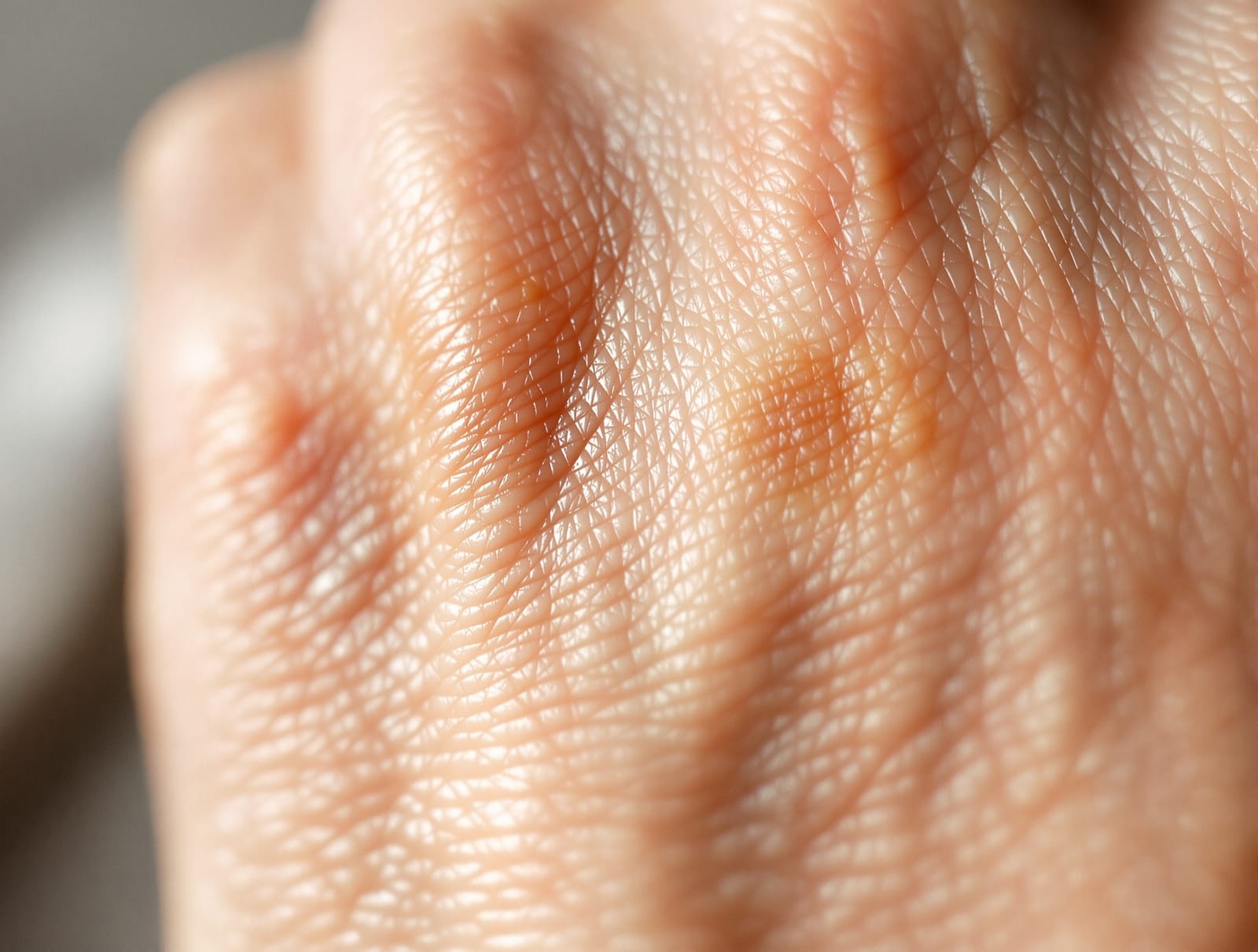
Brown spots that surface on sun-exposed skin after midlife are not all the same thing, and two of the most common are routinely confused: the flat solar lentigo, better known as an age spot, and the raised, waxy seborrheic keratosis. They can sit side by side on the same hand or temple, both look brown, and both are almost always harmless. But they are different growths with different textures, and they respond to completely different treatments. Telling them apart saves you money, spares you the wrong procedure, and occasionally catches something that needs a closer look.
What an Age Spot Actually Is
An age spot, or solar lentigo, is a flat patch of excess pigment. Years of ultraviolet exposure push melanocytes in the epidermis to overproduce melanin, which clusters in the upper skin layers and shows up as a tan-to-brown mark that is level with the surrounding skin. Run a fingertip over it and you feel nothing: the surface is smooth. Age spots are uniform in color, have fairly defined edges, and tend to appear on the face, the backs of the hands, the shoulders, and the upper chest, the areas that catch the most sun. The Mayo Clinic notes that age spots are flat, painless, and driven by overactive pigment cells after sun exposure (Mayo Clinic).
What a Seborrheic Keratosis Actually Is
A seborrheic keratosis is not a pigment problem at all. It is a benign overgrowth of skin cells, one of the most common non-cancerous skin growths in older adults. Instead of lying flat, it sits on top of the skin with a raised, slightly rough surface that dermatologists often describe as stuck on, as though a bit of candle wax or a small scab were pressed onto the skin and could be flicked off. Color ranges from light tan to dark brown or nearly black, and the surface can look waxy, warty, or crumbly. According to the American Academy of Dermatology, seborrheic keratoses are harmless, tend to run in families, and grow more numerous with age (AAD).
The Fingertip Test: Texture Is the Tell
The single most useful home check is touch, not color. Close your eyes and run a clean fingertip lightly across the spot. An age spot is flat and smooth, indistinguishable in texture from the skin around it. A seborrheic keratosis is raised and palpable: you can feel its edge, and the top often has a slightly rough, dry, or waxy feel. Because these growths build outward rather than staining the skin, they can also snag on clothing or jewelry, get irritated, and occasionally itch, something a flat lentigo never does. Under magnification, dermatologists look for the tiny surface plugs and the well-demarcated, pasted-on border that are classic for keratoses (StatPearls, NCBI).
Why the Distinction Changes the Treatment
This is where getting it right matters for your wallet and your skin. Age spots respond to treatments that target pigment: broad-spectrum sunscreen to prevent new ones, topical brighteners, and pigment-selective lasers or intense pulsed light that break up melanin. None of those tools does much for a seborrheic keratosis, because there is no loose pigment to break up; the growth is extra tissue. A keratosis is instead removed physically, usually by cryotherapy (freezing with liquid nitrogen), shave excision, or curettage. Aim an at-home light device at a raised keratosis expecting it to fade like an age spot and you will simply burn through sessions with nothing to show. If you are unsure which tool fits which spot, our walkthrough of what a good dermatologist checks in a pigment consultation shows how clinicians sort this out before touching anything.
When Either One Needs a Doctor, Not a Guess
Most age spots and seborrheic keratoses are cosmetic only. The important exception is change. A brown growth that appears suddenly and enlarges quickly, bleeds, itches persistently, or develops uneven color and ragged borders deserves prompt evaluation, because melanoma can occasionally mimic both a lentigo and a keratosis. There is even a recognized warning pattern, the sudden eruption of many keratoses at once, that can rarely signal an internal problem (Mayo Clinic). We cover the specific danger signs in detail in our guide on how to tell an age spot from a melanoma, and the rule there applies here too: any new or changing pigmented lesion in adulthood is worth a two-minute look from a board-certified dermatologist with a dermatoscope.
The Bottom Line
Age spots are flat stains of pigment; seborrheic keratoses are raised, waxy growths that sit on the surface. The quickest way to separate them at home is the fingertip test: smooth means lentigo, raised and rough means keratosis. The distinction is not academic, because it decides whether pigment-fading treatments or physical removal is the right path, and because chasing the wrong fix wastes both time and money. When texture, color, or growth pattern changes, stop guessing and get it checked. For everything else, matching the spot to the right treatment is the difference between a real result and a run of pointless sessions.
Related reading: Why your age spots keep coming back.
More in Explainer
View all →- Sun spots on skin: the four-question sort that tells you which of four things you actually have
- What causes liver spots: the dose ledger your skin has been keeping
- What Are Age Spots, Really? Three Definitions, and Where They Disagree
- Why Age Spots Shrug Off Most Fading Creams, and What Actually Works on Them